

On this page
An employer of record Portugal setup is a service in which a provider becomes the legal employer of your Portuguese hire for a monthly fee that currently starts at $599 per employee at both Deel and Remote, so you can hire in Portugal without registering a local company. On top of salary you fund Portugal’s mandatory employer stack: the 23.75% employer social security contribution (the TSU) and the holiday and Christmas subsidies that make the salary year 14 payments, not 12, per the rates in RemoFirst’s Portugal guide. The employee’s own 11% social security share is withheld from their pay rather than added to your cost. The employer of record (EOR) carries the obligations set by the Código do Trabalho, Portugal’s labor code, while you direct the work, and the EOR usually wins on cost until you pass roughly 10 to 15 people in Portugal.
Portugal hiring costs at a glance
| Portugal hiring cost | Amount | Who it applies to | Source |
|---|---|---|---|
| EOR service fee | Starts at $599 per employee a month, current list prices | Any hire in Portugal, paid to the provider | Deel and Remote pricing pages |
| Employer social security (TSU) | 23.75% of gross salary | Every employer in Portugal | RemoFirst Portugal guide |
| Employee social security | 11% of gross salary, withheld | Every employee | RemoFirst Portugal guide |
| Holiday subsidy | One extra month’s salary, paid before the vacation, commonly in June | Every employee | Lei 7/2009, Article 264 |
| Christmas subsidy | One extra month’s salary, due by 15 December | Every employee | RemoFirst Portugal guide |
| Work-accident insurance | Typically quoted at 1 to 2% of payroll | Every employer, a separate private policy | RemoFirst Portugal guide |
| Minimum wage | €920.00 a month over 14 payments, from 1 January 2026 | The national floor every salary must clear | Decreto-Lei 139/2025 |
The 14-payment year is the line foreign employers most often miss: an annual budget is the monthly salary times 14, not times 12, so a full-time hire at the €920.00 floor set by Decreto-Lei 139/2025 costs €12,880 a year in wages alone before any contribution. The employee’s 11% share sits inside the gross salary, withheld by the EOR, while the 23.75% employer rate is paid on top. The EOR fee is the only discretionary line in the table; salary, contributions and the minimum wage are set by statute and the market.
How an EOR works in Portugal
You hire employees in Portugal through the EOR: it becomes the legal employer of your hire under a Portuguese employment contract, while your company keeps directing the work, setting goals and running reviews through a service agreement. The provider runs EOR services: it holds a registered Portuguese entity, signs the contract and puts the worker on its payroll. You stay responsible for the work itself: hiring decisions, goals, reviews and tools.
A new hire starts with a probation period of up to 90 days for most roles, extended to 180 days for technical or trust positions and 240 days for senior management, with 15 or 30 days on fixed-term contracts by length, the brackets Article 112 of Lei 7/2009 sets.
The indefinite contract is the legal default in Portugal: a fixed-term contract is allowed only for a stated temporary need, capped at two years with limited renewals, and an uncertain-term contract can run to four years, the current rules RemoFirst’s Portugal guide summarizes. The normal working week is capped at 8 hours a day and 40 hours a week, under Article 203 of the same code.
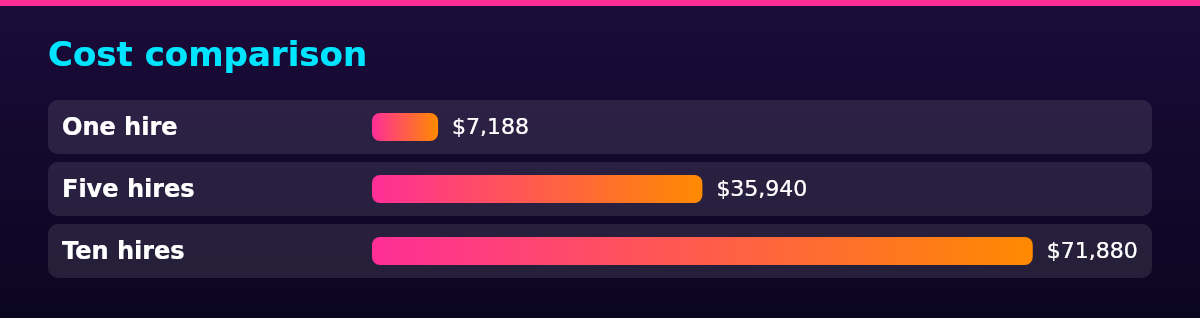
Cost comparison
| Headcount in Portugal | EOR cost per employee a year | Local entity route |
|---|---|---|
| One hire | $7,188 | Weeks of company incorporation and payroll setup before the first salary |
| Five hires | $35,940 | The same fixed setup, now spread across five salaries |
| Ten hires | $71,880 | Usually where a local entity’s fixed cost beats the fee |
The fee column works from the $599 a month starting price that Remote’s EOR pricing page currently shows for annual contracts, times 12, and it excludes salary and the mandatory contributions, which you fund under either route.
The fee is the only line that varies between quotes, because employer of record service costs differ mainly in what the monthly price includes rather than in the number itself. A provider’s list price can cover a bare contract or a bundle with benefits administration, so compare inclusions before you compare numbers.
The entity route has no per-worker fee, but it replaces the fee with fixed costs: incorporation of a Portuguese limited company (an Lda), a payroll operation, local accounting and filings, and obligations that continue after your last hire in the country leaves. The switch is usually modeled at 10 to 15 employees, where the accumulated fees pass the modeled fixed cost of running the entity.
Legal compliance in Portugal
Legal compliance in Portugal starts with the Código do Trabalho, Lei 7/2009, which applies to every employee working in the country, foreign employer or not: its core standards include the 8-hour day and 40-hour week under Article 203, and a minimum of 22 working days of paid vacation under Article 238.
Overtime carries a premium under the amended code, at the current rates RemoFirst’s Portugal guide lists: 25% above the regular rate for the first overtime hour and 37.5% for subsequent hours on working days, 50% on rest days and public holidays, with overtime capped around 150 hours a year.
Parental leave runs 120 to 180 days for the mother and 28 days for the father, the current entitlements per the same RemoFirst Portugal guide.
The contractor route is where compliance risk concentrates. Portuguese law presumes employment for continuous work performed under subordination, whatever the invoice calls it, so a contractor default carries reclassification into an employment relationship with the back contributions that follow. The difference between the two routes is what an employer of record is not a contractor arrangement covers: the EOR worker holds a full employment contract.
Permanent establishment, the corporate-tax question that sits beside employment compliance, turns on what your company itself does in Portugal, and an EOR arrangement does not make the question go away. The permanent establishment triggers that matter here are a fixed office, a dependent agent and staff who conclude contracts in your company’s name.
A candidate who needs work authorization adds a sponsor question, because Portuguese work permits generally run through an employer registered in the country. An EOR can sponsor work authorization where it holds its own Portuguese entity, so confirm the provider’s local setup before the offer goes out.
Payroll taxes in Portugal
Portugal payroll taxes on the employer side are the 23.75% TSU contribution on gross salary, plus the withholding of the employee’s own 11% share from each paycheck, so a €3,000 monthly salary costs €3,712.50 in salary plus employer contributions, per the rates in RemoFirst’s Portugal guide. Work-accident insurance is separate from the TSU: a mandatory private policy, typically quoted at 1 to 2% of payroll.
The salary year runs in 14 payments: the holiday subsidy, one extra month’s pay, is due before the vacation, commonly in June, and the Christmas subsidy, another month’s pay, by 15 December, with the vacation-subsidy basis in Article 264 of Lei 7/2009. Both subsidies are taxed and contribute to social security like salary.
Income tax on employment income (IRS, imposto sobre o rendimento das pessoas singulares) is withheld at source on a progressive scale that varies with income and family circumstances, per RemoFirst’s Portugal guide, so the withholding is computed per employee and there is no flat employer rate to budget. The EOR files the monthly social security declarations and the withholding, which is the practical reason most foreign employers route the stack through a provider rather than a local payroll they build themselves.
EOR versus a local entity
The decision is EOR or Portugal subsidiary: the EOR wins on speed and on cost at small headcounts, where the fee plus the mandatory stack is your whole local fixed cost and the provider already holds the registered entity and a payroll operation. A Portugal subsidiary, the Lda limited company, wins on cost per worker at scale, on direct control of contracts, benefits and banking, and when Portugal stops being a single hire and becomes a core market.
The contractor route is the third option and the weakest default: invoices skip the TSU and the subsidies only until the employment presumption applies, and continuous subordinate work is exactly what the presumption looks for. The reclassification cost lands on the hiring company, not the invoice.
Registering your own company in Portugal is the point where you no longer need the EOR, not a requirement to hire. An entity means incorporation of an Lda, your own payroll and accounting, and obligations that survive headcount changes, so treat it as a multi-year commitment modeled against the fee, usually at 10 to 15 employees.
Scaling framework
| Stage | Headcount in Portugal | Company or EOR | Trigger to move on |
|---|---|---|---|
| First hires | 1 to 2 workers | EOR | The EOR fee is still small next to Portugal entity setup |
| Growing team | 3 to 9 workers | EOR, entity modeled | Per-worker EOR fees pass a modeled entity cost |
| Local presence | 10 or more workers | Local entity | The fixed entity cost beats $7,188 a year per worker |
When to set up a Portugal company is arithmetic: multiply the EOR’s monthly starting price by twelve and by your headcount, then set that total against the modeled fixed cost of running an entity in Portugal. The switch pays back when the fixed cost comes in below the fee total for your team.
Below that scale the EOR usually wins on speed and exit flexibility alone, and moving workers from an EOR to a new entity takes fresh local contracts, so agree transfer terms in the original service agreement before you need them.
Termination rules in Portugal
| Scenario | Notice | Severance |
|---|---|---|
| Objective dismissal (job extinction, collective, unsuitability) | 15 to 75 days, by seniority | 14 days’ base pay and seniority pay per year of service, capped at 12 months’ salary or 240 times the monthly minimum wage |
| Unlawful dismissal | None; the remedies are reinstatement or the compensation | 15 to 45 days’ base pay and seniority pay per year of service, minimum 3 months, plus back pay |
| Fixed-term expiry | 15 days for the employer’s non-renewal notice, 8 days for the worker’s | 24 days’ base pay and seniority pay per year of service |
| Resignation | 30 days with up to 2 years of service, 60 days beyond; 30 or 15 days on a fixed-term contract | None; missing notice costs base pay plus seniority pay for the missing days |
| During probation | 7 days once probation has run past 60 days, 30 days past 120, employer notice | None |
Termination notice and severance in Portugal scale with seniority: 15 days under one year of service, 30 days at one to five years, 60 days at five to ten, and 75 days beyond ten, for collective, job-extinction and unsuitability dismissals, the brackets Eurofound’s restructuring legislation database records for the Labor Code as amended.
Severance for an objective dismissal is set at 14 days of base pay and seniority pay per full year of service, capped at 12 months’ salary or 240 times the monthly minimum wage, the compensation Article 366 of the Labor Code sets as amended by Lei 13/2023 (togai.pt consolidated text).
A fixed-term contract that runs to expiry pays 24 days of base pay and seniority pay per full year of service, and the worker who declines the renewal is owed nothing; the employer gives 15 days’ non-renewal notice and the worker 8 days, the deadlines and figures in despacho.pt’s non-renewal guide.
An employee’s resignation carries its own notice under Article 400 of the Labor Code: 30 days on an open-ended contract with up to two years of service, 60 days beyond that, and 30 or 15 days on a fixed-term contract by whether it lasts six months, the deadlines in the despacho.pt notice guide. A management or director role can carry a contractual notice of up to six months, and notice served short costs the leaver their base pay for the missing days.
An unlawful dismissal is priced separately: 15 to 45 days’ base pay and seniority pay per year of service, with a three-month floor and back pay owed, under Articles 391 and 396 of Lei 7/2009. Portugal is not an at-will jurisdiction: every exit carries a statutory cost, and your EOR administers the exit while the decision sits with you.
During probation the exit is lighter: the employer ends the contract with 7 days’ notice once the probation has run past 60 days, and 30 days once past 120, under Article 114 of the consolidated code, with no severance owed.
FAQ
An employer of record in Portugal is a provider that becomes the legal employer of your hire under a Portuguese employment contract, runs their payroll, pays the TSU contributions and funds the 14-payment salary year, while your company directs the work through a service agreement. You use one to employ someone in Portugal without registering your own company there.
An employer of record in Portugal currently starts at $599 per employee a month, the starting price on Deel’s EOR pricing page.
Remote’s EOR pricing page also starts at $599 per employee a month, for annual contracts. On top of the fee you fund the mandatory stack: the 23.75% employer TSU contribution, the holiday and Christmas subsidies, and the separate work-accident insurance policy.
Yes, a US company can hire an employee in Portugal without opening a local company, by using an EOR as the legal employer, or by registering its own Portuguese entity for a longer-term presence. Portugal is a common pick among the countries where US employers hire remote workers.
The minimum wage in Portugal is €920.00 a month from 1 January 2026, set by Decreto-Lei 139/2025, and it is paid over 14 installments a year, which puts the annual floor at €12,880 before any contribution.
Employees in Portugal get a minimum of 22 working days of paid vacation a year, under Article 238 of Lei 7/2009, the Código do Trabalho, with the holiday subsidy paid before the vacation is taken.