

On this page
An employer of record Brazil arrangement is a service in which a provider becomes the legal employer of your Brazilian hire for a monthly fee that currently starts at $599 per employee at both Deel and Remote, so you can hire in Brazil without registering a local company. On top of salary you fund Brazil’s mandatory employer stack: the 8% FGTS severance deposit, a 20% employer contribution to Brazil’s social security system (the INSS) under the Lucro Real and Lucro Presumido tax regimes, the 13th salary, and a one-third bonus on vacation pay. The employee’s own INSS contribution, 7.5% to 14% of pay under the 2026 table, is withheld from the salary your employer of record pays in Brazil rather than added to your cost. The employer of record (EOR) in Brazil carries the obligations set by the CLT, Brazil’s labor code, while you direct the work, and the EOR usually wins on cost until you pass roughly 10 to 15 people in Brazil.
Brazil hiring costs at a glance
| Cost item | Amount | Which regime it applies to | Source |
|---|---|---|---|
| EOR service fee | Starts at $599 per employee a month, current list prices | Any regime, paid to the provider | Deel and Remote pricing pages |
| FGTS severance deposit | 8% of monthly salary | Every regime, CLT employees | Official FGTS portal |
| Employer INSS contribution | 20% of payroll | Lucro Real and Lucro Presumido | Lei 8.212, Article 22 |
| Employer CPP contribution | Included in the unified DAS payment | Simples Nacional, with service exceptions | LC 123, Article 13 |
| RAT workplace-accident insurance | 1%, 2% or 3% of payroll by activity | Non-Simples regimes | Lei 8.212, Article 22 |
| 13th salary | 1/12 of monthly salary per month worked | Every regime | Lei 4.090 |
| Vacation | 30 calendar days, plus a one-third bonus | Every regime | CLT Article 130 |
| Employee INSS contribution | 7.5% to 14% of salary, withheld | Every regime, 2026 table | INSS 2026 table |
The employee contribution follows the 2026 progressive table: 7.5% on the first bracket, salaries up to R$ 1,621.00, rising to 14% at the top, capped at the R$ 8,475.55 monthly ceiling (INSS 2026 contribution table). The EOR fee is the only discretionary line, every other row is set by statute, and salary itself dwarfs both. The $599 fee is Deel’s current starting list price, and Remote’s starting price at the same level for annual contracts.
How an EOR works in Brazil
The EOR becomes the legal employer of your hire under a local CLT employment contract, while your company keeps directing the work, setting goals and running reviews through a service agreement. The provider runs EOR services: it holds a registered Brazilian entity, signs the contract and puts the worker on its payroll. You stay responsible for the work itself: hiring decisions, goals, reviews and tools.
A new hire can start on a probation contract of up to 90 days, the maximum CLT Article 445 allows, before the position converts to an open-ended contract.
Payroll runs through eSocial, the government platform where the EOR files every employment event, salary and contribution digitally, so the statutory reporting happens without your team touching it.
Cost comparison
| Headcount in Brazil | EOR fee per year | Local entity route |
|---|---|---|
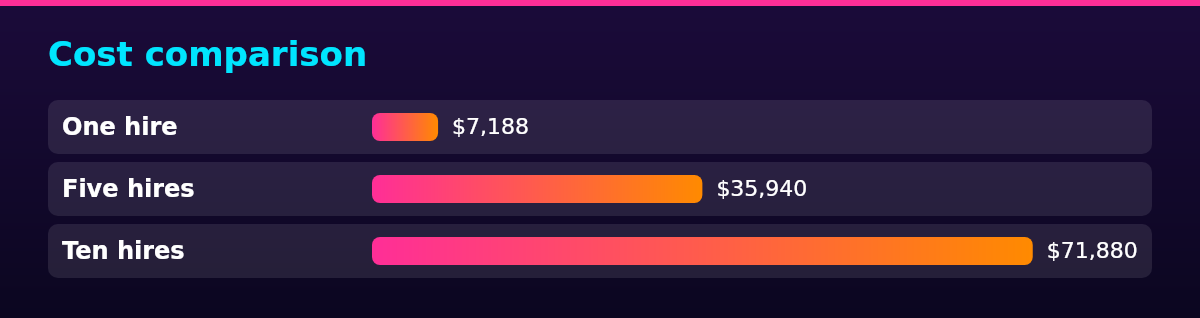
| One hire | $7,188 | Months of company registration and payroll setup before the first salary |
| Five hires | $35,940 | The same fixed setup, now spread across five salaries |
| Ten hires | $71,880 | Usually where a local entity’s fixed cost beats the fee |
The fee column works from the $599 a month starting price that Remote’s EOR pricing page currently shows for annual contracts, times 12, and it excludes salary and the mandatory contributions, which you fund under either route.
The fee is the only line that varies between quotes, because employer of record service costs differ mainly in what the monthly price includes rather than in the number itself. A provider’s list price can cover a bare contract or a bundle with benefits administration, so compare inclusions before you compare numbers.
The entity route has no per-worker fee, but it replaces the fee with fixed costs: company registration that typically takes months, a payroll operation, local accounting and filings, and obligations that continue after your last hire in the country leaves. The switch is usually modeled at 10 to 15 employees, where the accumulated fees pass the modeled fixed cost of running the entity.
Legal compliance in Brazil
The CLT (Consolidação das Leis do Trabalho, Brazil’s consolidated labor code) applies to every employee based in the country, foreign employer or not, and Article 7 of the Constitution sets the core standards: an 8-hour day and a 44-hour week, overtime paid at least 50% above the regular rate, and 120 days of maternity leave.
The contractor route is where compliance risk concentrates. Under the CLT’s employee test (Articles 2 and 3), a person who provides continuous, dependent services for a salary is an employee whatever the contract calls them, and the common PJ arrangement, where the person invoices through their own one-person company, does not opt out of the test.
Permanent establishment, the corporate-tax question that sits beside employment compliance, turns on what your company itself does in Brazil, and an EOR arrangement does not make the question go away. The permanent establishment triggers that matter here are a fixed office, a dependent agent and staff who conclude contracts in your company’s name.
A candidate who needs work authorization adds a sponsor question, because Brazilian work visas generally run through an employer registered in the country. An EOR can sponsor a visa where it holds its own Brazilian entity, so confirm the provider’s local setup before the offer goes out.
Payroll taxes in Brazil
Employer payroll costs in Brazil are the 8% FGTS severance deposit plus the INSS employer contribution, and the INSS rate depends on the hiring entity’s tax regime. Companies taxed under Lucro Real or Lucro Presumido pay a 20% contribution on payroll, Article 22 of Lei 8.212.
Simples Nacional companies do not pay the 20% separately: the employer CPP contribution sits inside the unified DAS monthly payment under LC 123, Article 13, with listed service activities excepted. Which regime your EOR’s own Brazilian entity falls under is a question for the provider, not something a pricing page states.
On top of the INSS, non-Simples companies pay RAT workplace-accident insurance, 1%, 2% or 3% of payroll by the activity’s CNAE risk classification, under Lei 8.212, Article 22. Simples companies pay the RAT inside the DAS as well.
The FGTS deposit is 8% of monthly salary under every regime, held in an account in the worker’s name, with the CLT-contract rate stated on the official FGTS portal.
The 13th salary accrues at 1/12 of monthly salary for each month worked, the formula Lei 4.090 sets, and you fund it under every regime.
It pays out in two parts, an advance between February and November and the balance by December 20, on the schedule in Lei 4.749.
The employee’s own INSS contribution, 7.5% to 14% of salary in the 2026 progressive table, is withheld from the paycheck rather than added to employer cost, capped at the R$ 8,475.55 monthly ceiling (2026 INSS table).
Every payroll event, from admission through each monthly pay to termination, is reported digitally through the same eSocial system the EOR files on your hire’s behalf.
EOR versus a local entity
The EOR wins on speed and on cost at small headcounts in Brazil: the fee plus the mandatory stack is your whole local fixed cost, and the provider already holds the registered entity and a payroll operation. A local company wins on cost per worker at scale, on direct control of contracts, benefits and banking, and when Brazil stops being a single hire and becomes a core market.
The contractor route is the third option and the weakest default: a PJ arrangement skips the FGTS, INSS and 13th salary costs only until the CLT employee test applies, and continuous dependent work is what the test looks for. An EOR is not a contractor arrangement: the worker gets a full CLT employment contract, which is the point.
An entity also means your own CNPJ (the company registration number), your own eSocial filings, local accounting and obligations that survive headcount changes. Treat the entity as a multi-year commitment, because registration and payroll setup run months ahead of the first salary, and the exit is nowhere near as clean as ending an EOR service agreement.
Scaling framework
| Stage | Headcount in Brazil | Hiring model | Trigger to move on |
|---|---|---|---|
| First hires | 1 to 2 workers | EOR | The fee is still small next to entity setup |
| Growing team | 3 to 9 workers | EOR, entity modeled | Per-worker fees pass a modeled entity cost |
| Local presence | 10 or more workers | Local entity | The fixed entity cost beats $7,188 a year per worker |
The arithmetic to watch is the per-worker fee from the cost table above: multiply the monthly starting price by twelve and by your headcount, then set that total against the modeled fixed cost of running an entity in Brazil. The switch pays back when the fixed cost comes in below the fee total for your team.
Below that scale the EOR usually wins on speed and exit flexibility alone, and moving workers from an EOR to a new entity takes fresh local contracts, so agree transfer terms in the original service agreement before you need them.
Termination rules in Brazil
| Dismissal scenario | Notice | Severance |
|---|---|---|
| Without cause | 30 days, plus 3 days per year of service, up to 90 days | 40% FGTS fine on all deposits, plus pro-rata 13th salary and vacation pay |
| Mutual agreement | Statutory notice applies | FGTS fine halved, withdrawal capped at 80% of the balance |
| Just cause | None | No FGTS fine, final balances still due |
Notice scales with service under Lei 12.506: 30 days for the first year, three more days for each full year after that, capped at 90 in total.
The 40% fine on the full FGTS balance, the without-cause severance penalty, comes from Lei 9.491, which restates the FGTS law’s Article 18.
A mutual-agreement termination halves that fine and caps the worker’s withdrawal at 80% of the FGTS balance, under CLT Article 484-A, and all termination payments are due within 10 days of the contract’s end under CLT Article 477, paragraph 6.
Just cause, the serious-misconduct dismissal in CLT Article 482, removes the fine and the notice but not the earned balances. Brazil is not an at-will jurisdiction: you can end a contract without giving a reason, but never without the statutory exit cost, and your EOR administers the exit while the decision sits with you.
FAQ
An employer of record in Brazil is a provider that becomes the legal employer of your hire under a CLT contract, runs their payroll and pays the mandatory contributions, while your company directs the work through a service agreement. You use one to employ someone in Brazil without registering your own company there.
An employer of record in Brazil currently starts at $599 per employee a month, the starting price on Deel’s EOR pricing page.
Remote’s EOR pricing page also starts at $599 per employee a month, for annual contracts. On top of the fee you fund the mandatory stack: the 8% FGTS deposit, the INSS employer contribution for the provider’s tax regime, the 13th salary and the one-third vacation bonus.
Yes, a US company can hire an employee in Brazil without opening a local company, by using an EOR as the legal employer, or by registering its own Brazilian entity for a longer-term presence. US tech companies increasingly hire remote workers from across Latin America.
FGTS (Fundo de Garantia do Tempo de Serviço) is Brazil’s mandatory severance fund: the employer deposits 8% of the worker’s monthly salary into an account in the worker’s name, and the balance pays out on dismissal, with a 40% fine added on a without-cause dismissal. The official FGTS portal states the 8% rate for CLT contracts.
No, you do not need a Brazilian company to hire in Brazil: an EOR can employ your hire through its own registered entity, which is how most foreign employers start. Your own entity becomes worth modeling at around 10 to 15 employees, when its fixed cost can beat the per-worker fee.