

On this page
An employer of record Netherlands arrangement makes a provider the legal employer of your Dutch hire for a service fee of about $599 a month per worker, the starting price currently on the Deel pricing page, so you can employ someone in the Netherlands without opening a local company. Employer social premiums add about 16.3% of gross salary for a small employer on the low 2026 tariffs, more on the high tariffs and with the sector premium, and a mandatory holiday allowance of at least 8% of annual salary comes on top of the wage. An employer of record (EOR) is the provider that does this employing: it signs the Dutch contract, runs payroll and the filings, while your company keeps directing the day-to-day work.
The alternative is a Dutch private limited company (besloten vennootschap, BV), which needs only €0.01 of share capital but a notarial deed at €500 to €1,500 and bookkeeping usually €600 to €1,800 a year, per the business.gov.nl guide to the BV. Because EOR fees scale with headcount and BV costs stay flat, the crossover lands somewhere between six and ten hires for most companies.
One Dutch-specific lever to plan for early is the 30% ruling: for qualifying hires from abroad, the employer may pay up to 30% of the salary tax-free, capped at €78,600 in 2026, under the Belastingdienst’s expat ruling rules. It can change the effective cost of a senior Dutch hire more than the provider’s fee does.
Netherlands hiring costs at a glance
| Cost item | 2026 amount | Who pays | Source |
|---|---|---|---|
| Employer of record service fee | $599 per worker a month | You, to the provider | Deel pricing, Remote pricing |
| Employer social premiums | Awf 2.74/7.74%, Aof 6.27/7.63%, Ufo 0.68%, Wko 0.50%, Zvw 6.10% (on wage up to €79,409 a year), plus a sector-set Whk premium | You, via payroll | Belastingdienst 2026 rates |
| Minimum holiday allowance | At least 8% of gross annual salary | You, with the yearly payout | Rijksoverheid |
| Statutory minimum wage | €14.71 an hour for workers 21 and older | You, as salary | Rijksoverheid 2026 minimums |
| Highly skilled migrant salary floors | €5,942 gross a month for migrants 30 or older, €4,357 under 30, €3,122 reduced criterion, all excluding holiday allowance | You, as salary, for non-EU hires | IND income requirements |
| BV setup instead | €0.01 minimum capital, notary €500 to €1,500 | You, once, if you incorporate | business.gov.nl |
| Transition compensation | One third of monthly salary per service year, capped at €102,000 gross | You, on dismissal | Rijksoverheid |
The premiums are a Netherlands cost, not an EOR cost: any Dutch employer pays them, whoever runs the payroll. The paired percentages are the low and high 2026 tariffs, and the 6.10% Zvw healthcare levy only applies to wage income up to €79,409 a year, per the Handboek Loonheffingen 2026.
Treat the table as a budgeting starting point: provider fees are negotiable as headcount grows, and salaries move the premium totals more than the fee line does.
How a Dutch EOR works
A Dutch EOR is the provider that becomes the legal employer of your Dutch worker on a Dutch employment contract, while your company keeps directing the work under a service agreement. The employer of record model works in the Netherlands as it does elsewhere: the provider’s entity holds the employment relationship, and you hold the working one.
In practice the provider registers as the employer with the Dutch tax authority (Belastingdienst), runs the monthly loonaangifte payroll filing, withholds payroll tax, pays the holiday allowance and applies any collective labor agreement (CAO) that covers the role. You choose the candidate, set the salary and manage performance; the provider signs, pays and files.
Onboarding typically takes a few business days to a few weeks once the contract is signed, with work permit applications adding longer for non-EU hires. That speed is the main reason an EOR is the standard way to hire employees in the Netherlands without a local entity.
Cost comparison
| Hires on the EOR | Fees a year |
|---|---|
| One | $7,188 |
| Five | $35,940 |
| Ten | $71,880 |
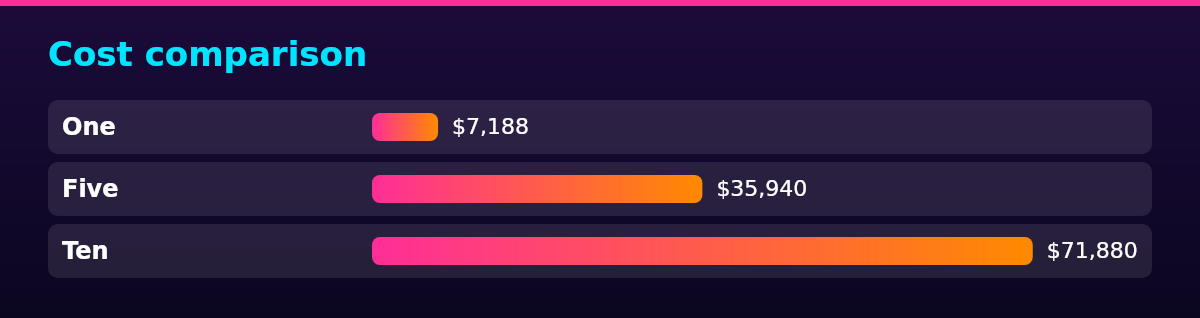
The EOR side of the cost comparison in the Netherlands is linear: at $599 a month per worker, the starting rate on the Remote pricing page, fees run $7,188 a year for one worker, $35,940 for five and $71,880 for ten. Every hire adds another $7,188.
A BV behaves the other way around: the notary deed costs €500 to €1,500 once, bookkeeping usually runs €600 to €1,800 a year, and the minimum share capital is €0.01, per the business.gov.nl guide to the private limited company. Its costs stay flat while the EOR bill climbs with every hire.
Employer premiums do not belong on either side of the comparison: they are a Netherlands cost paid on any Dutch payroll, the EOR’s or the BV’s own. The EOR fee is the marginal cost of not running your own Dutch payroll, so the crossover arrives when the per-worker fees pass the BV’s fixed costs plus in-house payroll capacity.
Fees also vary by market, and the cost of employer of record services ranges widely by country, so the quoted rate is a starting point rather than a fixed price. Most providers discount once several workers sit on the same country payroll.
Legal compliance in the Netherlands
Dutch employment law applies to every worker employed in the Netherlands, whichever entity signs the contract, and an EOR takes the paperwork off foreign employers without changing the rules themselves. The provider signs and files, but the contract still has to meet the statutory minimums on hours, leave, notice and pay.
The Working Hours Act caps a shift at 12 hours and a week at 60 hours, with averages of 55 hours over 4 weeks and 48 over 16 weeks, and requires at least 11 consecutive hours of rest after a working day, under the Rijksoverheid’s working time rules. CAOs may deviate within the 60-hour ceiling.
Holiday allowance of at least 8% of gross annual salary is mandatory and paid out at least once a year, with most employers paying it in May or June. A CAO may drop it only if the wage is at least 108% of the statutory minimum, per the Rijksoverheid’s holiday allowance rules.
Probation is optional and time-boxed: contracts of 6 months or shorter cannot have one, contracts longer than 6 months but shorter than 2 years can carry at most 1 month, and contracts of 2 years or longer, including permanent ones, at most 2 months, per the Rijksoverheid’s probation rules.
More than three successive fixed-term contracts, or fixed-term employment longer than three consecutive years, converts into a permanent contract, with CAOs able to deviate. One confirmed change is coming: the Wet meer zekerheid flexwerkers, passed by the Senate on 7 July 2026, tightens the chain rules from 1 January 2028, per the Rijksoverheid’s contract rules.
Contractor misclassification is the other risk to manage. Under the Belastingdienst’s employment relationship criteria, whether a worker is an employee turns on authority over the work, the obligation to perform it personally, and payment for the work, plus all surrounding facts and circumstances; the contract’s label does not decide it.
Enforcement has sharpened: the moratorium on the DBA act, the Dutch rules against disguised employment, ended on 1 January 2025, and since then the Belastingdienst can impose corrections and retroactive payroll tax assessments directly, with culpable fines back on the table from 1 January 2026, per its enforcement page. Assessments normally reach back no further than 1 January 2025, or five years in cases of intent.
That is why an employer of record is not the same as hiring a Dutch freelancer, and the difference between an EOR and a contractor is worth settling before the first engagement: the EOR route puts the worker on a payroll from day one.
On permanent establishment, the EOR’s Dutch employment contract, not your company’s own presence, is the local employment relationship, which is the structural reason the arrangement does not by itself create a Dutch permanent establishment for the hiring company. The permanent establishment rules turn on whether your company itself carries on business in the Netherlands, not on whether someone works there for you.
Payroll taxes in the Netherlands
Dutch employer social premiums in 2026 are 2.74% unemployment insurance (Awf) on the low tariff or 7.74% on the high one, 6.27% for older and partially disabled employees (Aof) for small employers or 7.63% for large ones, 0.68% disability premium (Ufo) and a 0.50% childcare surcharge (Wko), per the Belastingdienst’s 2026 payroll tax rates.
The low Awf tariff requires a permanent contract, laid down in writing, that is not an on-call arrangement; all other contracts pay the high tariff, per the Belastingdienst’s premium differentiation rules. The Aof tariff follows employer size, measured by the 2024 wage bill.
Two more premiums sit on top: the Zvw employer healthcare levy of 6.10%, applied to wage income up to €79,409 a year, and the differentiated Whk premium, which is set per employer by sector, per the Handboek Loonheffingen 2026.
The worker’s side is withholding, not an employer cost: payroll tax (loonheffing) in the first 2026 bracket runs at 35.75% of wage income up to €38,883 a year, built from 8.10% wage tax, 17.90% old-age (AOW), 0.10% survivors (Anw) and 9.65% long-term care (Wlz), per the Belastingdienst’s 2026 rate table.
The EOR files all of this monthly through the loonaangifte payroll return to the Belastingdienst, and issues each worker an annual statement for their income tax return. Ask the provider for copies of the filings, because they are the records an auditor or a future BV will ask for.
The 30% ruling is the one big payroll lever: for a qualifying employee recruited from abroad, the employer may pay up to 30% of the salary tax-free, capped at €78,600 in 2026, for at most 5 years. It requires a taxable salary above €48,013, or above €36,497 for under-30s with a Dutch academic master’s or equivalent foreign degree, and residence more than 150 km from the Dutch border for more than 16 of the 24 months before the Dutch start date, per the Belastingdienst’s 30% ruling page.
EOR versus a local entity
An EOR fits the first hire, a small team, or an untested market: it starts quickly and ends with the notice period in the service agreement. A BV fits a committed Dutch operation, one with local managers, in-house payroll and its own permit sponsorship. A Dutch contractor is the third route, but it suits a project, not an employment relationship.
The BV itself is cheap to start: €0.01 of minimum share capital, a notarial deed, registration with the chamber of commerce (KVK) and UBO registration, with notary fees typically €500 to €1,500 and bookkeeping usually €600 to €1,800 a year, per the business.gov.nl guide to the BV. A director-major shareholder (DGA) holding more than 5% must also take a customary market-rate salary.
Hiring non-EU nationals needs the highly skilled migrant route on either path, which runs through recognized sponsorship: the EOR must be a recognized sponsor with the Dutch immigration service (IND), or your own BV must become one. The 2026 gross monthly salary floors are €5,942 for migrants 30 or older, €4,357 for those under 30 and €3,122 for the reduced criterion for orientation-year graduates, per the IND’s income requirements.
A Dutch EOR is not a professional employer organization (PEO): the difference between a PEO and an EOR is that a PEO co-employs through your own entity, while an EOR employs without one. The practical choice in the Netherlands is therefore an EOR, a BV or a contractor.
Scaling framework
| Stage | Headcount | Hiring model | Trigger to move on |
|---|---|---|---|
| First hire | 1 | EOR | The hire works out and a second is planned |
| Small team | 2 to 5 | EOR, confirming the provider’s Whk sector classification | Fees approach the BV’s fixed yearly cost |
| Established team | 6 to 10 | EOR or a BV, by in-house payroll capacity | A Dutch manager or in-house loonaangifte is needed |
| Committed presence | 10 or more | BV with in-house payroll and its own recognized sponsorship | Ongoing, reviewed yearly |
The pattern behind the table is when to set up a Dutch BV: EOR costs are marginal and BV costs are fixed, so the switch pays off once the per-worker fees pass the fixed costs plus the cost of running Dutch payroll in-house.
Moving workers from an EOR to your own BV means new employment contracts, so agree transfer terms with the provider before signing the original service agreement.
Termination rules in the Netherlands
| Item | Rule in the Netherlands (2026) |
|---|---|
| Dismissal routes | UWV permit for business-economic grounds or long-term incapacity; subdistrict court (kantonrechter) for the other grounds |
| Employer notice period | 1 month under 5 years of service, 2 months from 5 years, 3 from 10, 4 from 15 |
| Employee notice | Half the employer’s notice |
| Notice from AOW age | 1 month |
| Transition compensation (severance) | One third of gross monthly salary per full year of service, accruing from day one, capped at €102,000 gross or one annual salary |
| Dismissals without review | Written consent, probation, summary dismissal (op staande voet), AOW age |
| Fixed-term contracts | End on their end date, with the aanzegtermijn written notice for contracts of 6 months or more |
The Netherlands has no at-will employment: dismissal needs a valid ground (redelijke grond), such as business economics, long-term incapacity after two years, frequent underperformance or culpable conduct, and most dismissals must first be reviewed by the employee insurance agency (UWV) or the subdistrict court, under the Rijksoverheid’s dismissal rules.
Notice follows length of service: employers owe 1 month under 5 years, 2 months from 5 years, 3 from 10 and 4 from 15, with the employee owing half of that, per the Rijksoverheid’s notice rules.
Transition compensation accrues from the first working day at one third of the gross monthly salary per full year of service, capped at €102,000 gross as of 1 January 2026, or one gross annual salary if that is higher, per the Rijksoverheid’s transition compensation page.
The EOR serves the notice and pays the compensation as legal employer, but the decision and its documentation stay with you, so build the cost of an exit into every Dutch hiring budget.
FAQ
About $599 per worker a month in service fees, the starting price currently on the Deel pricing page, plus the Dutch employer premiums and the 8% holiday allowance that any employer owes on top of salary. For a small employer on the low 2026 tariffs the premium stack runs to about 16.3% of gross salary.
Yes, an employer of record is a legal and ordinary way to employ someone in the Netherlands: the provider is a registered Dutch employer, your worker gets a normal Dutch employment contract, and Dutch employment and payroll law applies in full.
Yes, that is the core of the arrangement: the employer of record’s Dutch entity is the legal employer, so the US company never needs its own BV to employ staff in the Netherlands. A BV starts to pay off once the team is large enough that the per-worker fees pass its fixed costs.
The 30% ruling lets an employer pay up to 30% of a qualifying employee’s salary tax-free, capped at €78,600 in 2026, for at most 5 years, per the Belastingdienst’s ruling page. It requires a taxable salary above €48,013, or above €36,497 for under-30s with a Dutch academic master’s or equivalent foreign degree, and residence more than 150 km from the Dutch border for more than 16 of the 24 months before starting work in the Netherlands.
Payroll tax deduction (loonheffing) is the withholding every Dutch employer runs on each wage payment: wage tax plus the national insurance premiums (AOW, Anw and Wlz) come off the gross wage before the net salary is paid. In 2026 the first bracket runs at 35.75% of wage income up to €38,883 a year, per the Belastingdienst’s 2026 rate table, and it is withheld from the employee’s wage rather than added as an employer cost.
Yes, when the provider is an IND recognized sponsor, because the highly skilled migrant route runs through recognized sponsorship. The 2026 salary floors are €5,942 a month gross for migrants 30 or older, €4,357 under 30 and €3,122 on the reduced criterion, per the IND’s income requirements. The way employer of record visa sponsorship works is that the provider files the permit application as the legal employer through its own entity.