

On this page
An employer of record UK provider is the legal employer of your worker in the United Kingdom, employing them on its own UK entity for about $599 a month per employee, the fee Deel currently charges, so you can employ someone in the UK without registering a UK company. The provider runs PAYE (Pay As You Earn) payroll, carries out the right-to-work check before day one, and applies the UK’s notice, holiday and pension rules to the role.
On top of salary you fund employer Class 1 National Insurance contributions at 15% of pay above the £5,000-a-year secondary threshold in the 2026 to 2027 tax year, per HMRC’s rates and thresholds for employers, plus a minimum employer pension contribution under auto-enrolment. The $599 fee works out to $7,188 a year per worker, so your own UK entity wins on cost once that figure times your headcount passes the fixed annual cost of running one.
UK hiring costs at a glance
| Cost item | Who pays | Typical amount (2026 to 2027) | Source |
|---|---|---|---|
| EOR monthly fee | You, the client company | $599 per employee per month (USD) | Deel, Remote |
| Employer National Insurance | Employer | 15% of pay above £5,000 a year | HMRC |
| Auto-enrolment pension | Employer | 3% minimum on qualifying earnings of £6,240 to £50,270 a year | GOV.UK |
| Statutory Sick Pay | Employer | £123.25 a week for up to 28 weeks | GOV.UK |
| Paid holiday | Employer | 5.6 weeks a year, bank holidays can count | GOV.UK |
| Employers’ liability insurance | Employer | At least £5 million of cover, from day one | GOV.UK |
| Entity setup instead | Employer | £100 online incorporation plus a £50 confirmation statement a year | Companies House fee list |
The EOR fee is the flat, predictable part of the monthly cost; the National Insurance and pension contributions scale with salary, and their thresholds are reset each tax year. An EOR folds all of it into one invoice, which is most of the appeal at low headcount, while the obligations themselves travel with the role whoever employs the worker.
How an EOR works
An employer of record (EOR) is the legal employer of your UK worker on a UK contract of employment with its own entity, so you direct the day-to-day work without becoming the employer yourself. The provider registers the worker on PAYE payroll, deducts income tax and National Insurance from each paycheck, and tells HMRC about the new employee on or before their first payday, per GOV.UK’s Employing someone guide.
It also carries out the right-to-work check before employment starts, auto-enrols the worker into a workplace pension, and administers the statutory holiday, sick pay and notice rules the role carries. Onboarding typically takes a few days when the provider already has a UK entity, against the weeks or months of incorporating your own company, and you keep the hiring decision, the pay you offer and the day-to-day management of the work.
Cost comparison
| Headcount | EOR fee (USD per year) | When a UK entity is cheaper |
|---|---|---|
| 1 hire | $7,188 | Its fixed running cost is under $7,188 a year |
| 5 hires | $35,940 | Its fixed running cost is under $35,940 a year |
| 10 hires | $71,880 | Its fixed running cost is under $71,880 a year |
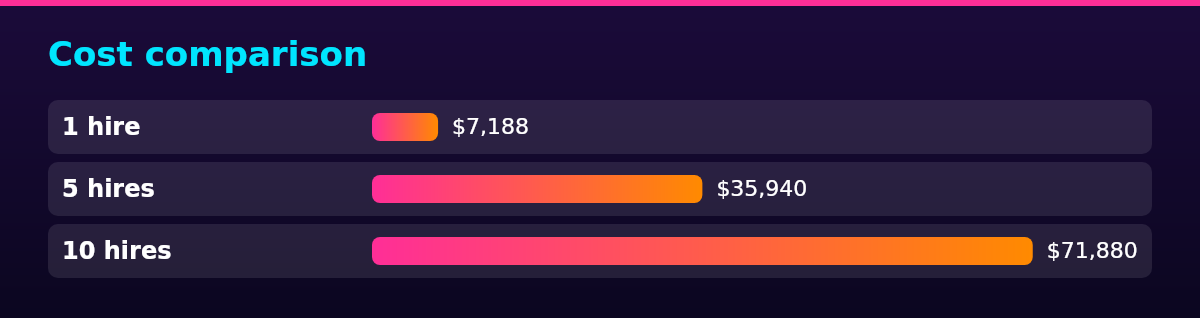
The EOR side scales linearly: the $599 monthly fee on Remote’s pricing page works out to $7,188 a year per worker, about $35,940 for five people and about $71,880 for ten. That flat fee against mostly fixed overhead sets the EOR vs UK entity cost crossover: your own UK entity wins on cost once $7,188 per worker times your headcount passes the fixed annual cost of running the company.
The entity side is mostly fixed: incorporating online currently costs £100 and the annual confirmation statement costs £50, per the Companies House fee list, and beyond that you pay accounting, a director’s time and payroll admin that barely rises with headcount. Both routes carry the same 15% employer National Insurance and the 3% pension minimum, so the comparison comes down to the EOR fee versus your fixed entity cost.
The cost of employer of record services guide breaks down how those fees vary across countries and providers.
Legal compliance in the UK
UK employment law attaches to whoever employs the worker, and under an EOR that is the provider’s UK entity: it owes the right-to-work check, the written statement of employment particulars, the working-time limits, holiday, sick pay and employers’ liability insurance. The rules below are the ones that apply across Great Britain; Northern Ireland runs its own versions of several of them.
The right-to-work check must happen before employment starts, using a Home Office share code, the worker’s original documents checked with the person present, or an Identity Service Provider, per GOV.UK’s right-to-work guidance. British and Irish citizens cannot get a share code, so their passport or passport card has to be checked instead, and copies must be kept during employment and for two years after it ends.
Hiring someone without the right to work in the UK risks a civil penalty of up to £60,000 per illegal worker, per GOV.UK’s penalty rules.
Your worker is owed a written statement of employment particulars, one of the steps in GOV.UK’s Employing someone guide, so the contract terms have to exist in writing from the start.
The working week is capped at an average of 48 hours over a 17-week reference period, and workers can opt out in writing, per GOV.UK’s working-hours rules.
Statutory Sick Pay runs at £123.25 a week for up to 28 weeks, paid by the employer, per GOV.UK.
Paid holiday runs at 5.6 weeks a year, and bank holidays can be counted inside it, per GOV.UK.
Employers’ liability insurance is compulsory from the first day of employment at a minimum of £5 million of cover, and being uninsured risks a fine of £2,500 a day, per GOV.UK.
Hiring a UK contractor instead of an employee shifts the payroll obligations but keeps the status question. Under the off-payroll rules known as IR35, a medium or large client, meeting two or more of turnover over £10.2 million, a balance sheet over £5.1 million and more than 50 employees, must determine the contractor’s status and issue a Status Determination Statement, answering any disagreement within 45 days; small clients are exempt and the worker’s intermediary decides, per HMRC’s off-payroll guidance for clients. If the engagement is inside IR35, the deemed employer deducts income tax and employee National Insurance and also pays employer National Insurance and the Apprenticeship Levy.
Because the EOR’s own UK entity is the employer of record for your worker, a first hire through a provider does not by itself make your company the employer of UK staff. The exposure to watch is a worker who habitually exercises authority to conclude contracts in your name, which can create a permanent establishment for your company; the permanent establishment guide covers how that risk builds and how to limit it.
Payroll taxes in the UK
PAYE is the UK’s payroll withholding system: the employer deducts income tax and the employee’s National Insurance from each paycheck, and must tell HMRC about a new employee on or before their first payday, per GOV.UK.
Employee Class 1 National Insurance runs at 8% of pay above the £12,570-a-year primary threshold in 2026 to 2027, with 2% above the £50,270 upper earnings limit, per HMRC’s rates and thresholds.
Employer Class 1 National Insurance contributions (NICs) run at 15% of pay above the £5,000-a-year secondary threshold in the same tax year, per the same HMRC rates page. On a £60,000 salary that is (£60,000 minus £5,000) at 15%, or £8,250 a year of employer NICs.
The rate is 0% on pay up to £50,270 a year for employees under 21 and for apprentices under 25, rising to 15% above that, per the same HMRC rates page.
Eligible employers can claim the £10,500 Employment Allowance a year to offset their employer NICs, but it belongs to whichever employer runs PAYE. Under an EOR that is the provider’s UK entity, not your company, so the allowance offsets the provider’s own NICs bill across its UK payroll rather than reducing your invoice.
Auto-enrolment adds a workplace pension on top: a minimum 3% employer contribution and 5% from the worker, 8% in total, on qualifying earnings between £6,240 and £50,270 a year, per GOV.UK.
Visas for foreign hires
British and Irish citizens, and workers who already have settled status in the UK, need no visa; the obligation for them is the right-to-work check. A hire who is not already entitled to work in the UK generally needs a Skilled Worker visa, which requires a salary of £41,700 a year or the occupation’s going rate, whichever is higher, per GOV.UK.
The sponsoring employer must be licensed by the Home Office and issue a certificate of sponsorship, and decisions take about three weeks for applications made outside the UK and about eight weeks inside, per GOV.UK’s Skilled Worker guide.
An EOR can sponsor a Skilled Worker visa only where it holds its own sponsor licence, which varies by provider rather than following from the EOR arrangement itself. Whether an employer of record can sponsor visas comes down to that licence, and if sponsorship is the point of the hire it is the first thing to ask a provider.
EOR versus a UK entity
An EOR fits a first hire or a small UK team, when speed matters and you want the employment obligations handled without a local presence; the provider carries the employer liability on its entity. Your own UK limited company fits scale, or when you need to hold UK intellectual property, grant equity to UK staff or run the payroll yourself.
Incorporating a UK limited company currently costs £100 online and needs at least one director, a registered office, a SIC code (the classification that identifies what the company does) and details of people with significant control, per GOV.UK’s company formation guide.
The annual confirmation statement currently costs £50, per the Companies House fee list.
A UK company pays corporation tax at 25% on profits over £250,000, with a 19% small profits rate at £50,000 of profit or less and marginal relief between, per GOV.UK.
The crossover is the one in the cost comparison: once your EOR fees pass your fixed annual entity cost, the entity wins on money alone. A UK EOR is also not a professional employer organization (PEO); the difference between the two models is who the legal employer is and whose entity runs the payroll.
Scaling framework
| Stage | Headcount | Model | Trigger to move on |
|---|---|---|---|
| First hire | 1 | EOR | You need entity control or equity grants |
| Early team | 2 to 5 | EOR | Admin load rises or you add a second country |
| Growing team | 6 to 10 | EOR or UK entity | EOR fees start to rival your own fixed running cost |
| Scale | 10+ | UK entity | You need IP holding, equity, or a large payroll |
Most employers start on an EOR because it needs no setup and carries the UK obligations from day one, then move to their own entity once the flat fees add up to more than the fixed cost of running a company. The trigger is usually cost at scale, or a need the provider cannot meet, such as granting equity or holding intellectual property in the UK.
Termination rules in the UK
| Rule | What it requires (Great Britain) | Source |
|---|---|---|
| Statutory notice | 1 week after a month of service, 1 week per full year of service from 2 to 12 years, capped at 12 weeks | Acas |
| Statutory redundancy pay | Half a week’s pay per year of service under 22, a week per year from 22 to 41 and 1.5 weeks per year from 41, capped at 20 years of service, a £751 weekly pay cap and a £22,530 maximum | GOV.UK |
| Unfair dismissal | Usually needs 2 years of service today; from 1 January 2027, most employees can claim after 6 months | GOV.UK |
A contract can promise more notice than the statutory minimum but never less, per the same Acas guide, so treat the notice bands above as a floor.
Statutory redundancy pay is a separate entitlement that needs two years of continuous service, per GOV.UK.
The unfair-dismissal line is the one to plan around: the qualifying period is usually two years of service today, but from 1 January 2027 most employees will be able to claim unfair dismissal after six months, per GOV.UK. Any UK hire you make now reaches six months of service after that date, so dismissals need a defensible reason and process far sooner than the current two-year rule suggests.
These statutory figures cover Great Britain. Northern Ireland runs its own employment rules, including an unfair-dismissal qualifying period that stays at usually one year, per the same GOV.UK page, rather than dropping to six months as it does in England, Scotland and Wales.
FAQ
About $599 per employee a month, the fee Deel currently charges, plus the employer costs on top: 15% employer National Insurance above £5,000 of pay a year and a 3% minimum pension contribution in the 2026 to 2027 tax year. At one hire that is $7,188 a year in fees before salary and any contributions.
Yes, a US company can employ someone in the UK without registering a UK company by using an employer of record: the provider becomes the legal employer on its own UK entity and runs PAYE payroll, the right-to-work check and the employment-law obligations. The US company keeps the working relationship, directs the work and funds the salary and employer costs through the provider.
Through an EOR: about $599 a month in fees, plus 15% employer National Insurance on pay above £5,000 a year and a 3% minimum employer pension contribution, per HMRC’s rates for 2026 to 2027, with Statutory Sick Pay and 5.6 weeks of paid holiday on top when they apply. On a £60,000 salary the employer National Insurance alone runs to £8,250 a year, and the cost table above breaks each line out with its source.
Yes, an EOR is a legal and ordinary way to employ someone in the UK: the provider is simply a UK company that employs people under UK employment law and runs PAYE with HMRC. There is no UK licence specific to employers of record, so the diligence is on the provider’s real UK entity, its PAYE registration and the employment contract it issues.
You hire through an employer of record when you have no UK company: the provider becomes the legal employer, runs the right-to-work check before day one, registers the worker on PAYE, auto-enrols the pension and issues the contract and the written statement of employment particulars. You pick the person, set the pay and manage the work day to day.
The legal employer: an employer of record employs your UK worker on its own entity and carries the employer obligations, while a professional employer organization (PEO) shares employer duties with you under a co-employment arrangement rather than replacing your own employment entity. The PEO vs EOR comparison sets the two models side by side.
No, not once you have been employed for a month: UK employers owe statutory notice of at least a week between one month and two years of service, a week per full year from two to twelve years, and up to twelve weeks at twelve years or more. A contract can give more notice, never less, and unfair-dismissal protection is separate, usually starting after two years of service today and dropping to six months from 1 January 2027.
At least a week for an employee with one month to two years of service, a week per full year of service from two to twelve years, and twelve weeks maximum at twelve years or more, per Acas. These are Great Britain’s statutory minimums; a contract can promise more notice, never less.
£100 to incorporate online with Companies House, £124 on paper, and a £50 confirmation statement each year, per the Companies House fee list. Same-day online incorporation currently costs £156.
Not by itself: the worker is employed by the EOR’s UK entity, not yours, so the first hire through a provider does not make your company the employer of UK staff. The exposure to watch is a worker who habitually concludes contracts in your name, which can create a permanent establishment for your company.